CCND2 Antibody
-
中文名稱:CCND2兔多克隆抗體
-
貨號:CSB-PA004812ESR2HU
-
規格:¥440
-
圖片:
-
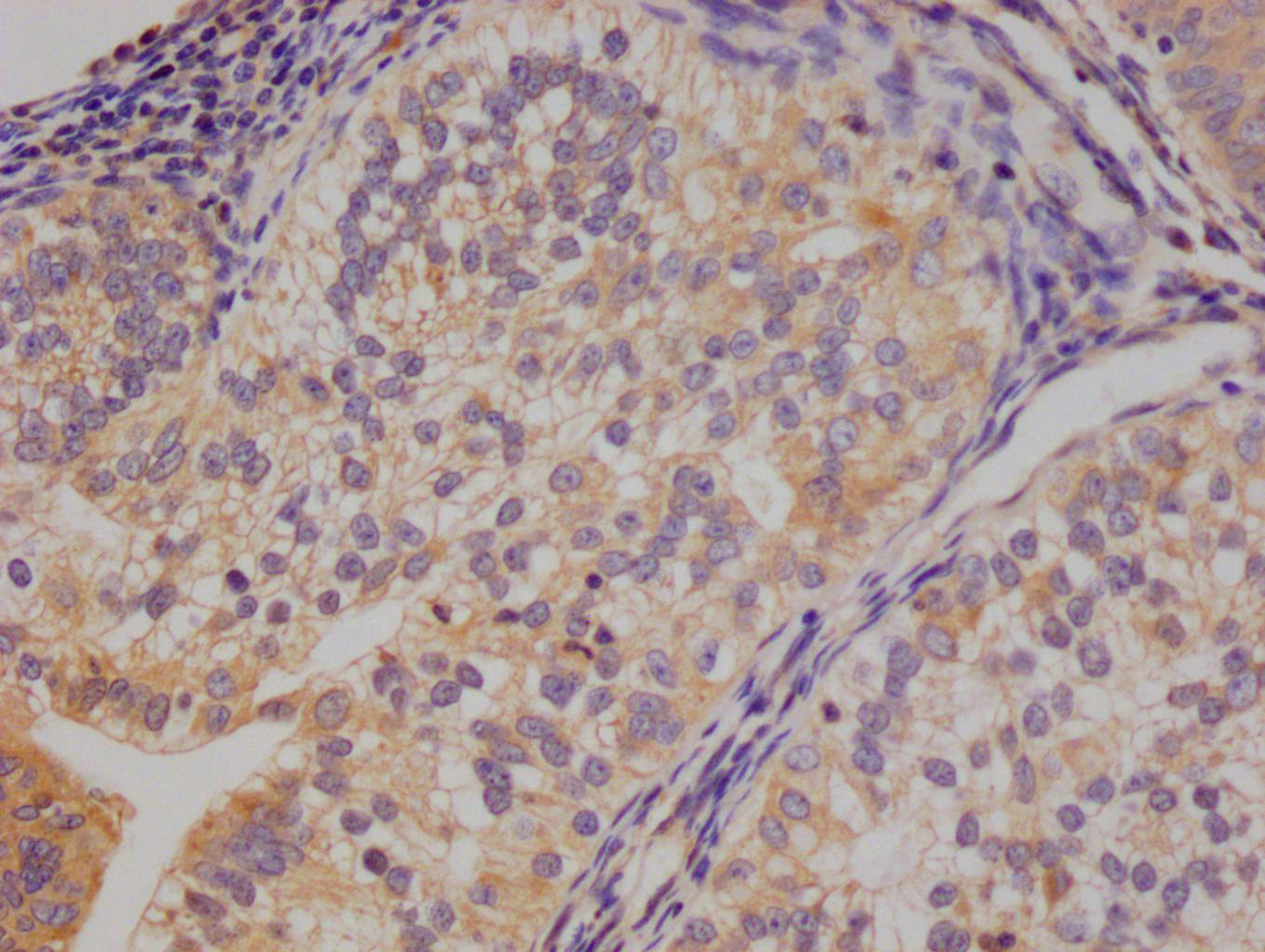
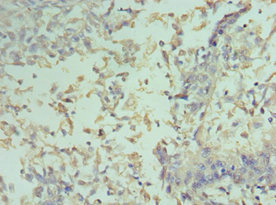 Immunohistochemistry of paraffin-embedded human cervical cancer using CSB-PA004812ESR2HU at dilution of 1:100
 -
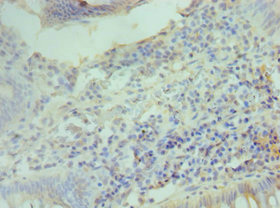 Immunohistochemistry of paraffin-embedded human colon cancer using CSB-PA004812ESR2HU at dilution of 1:100
 -
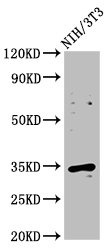 Western Blot
Positive WB detected in: NIH/3T3 whole cell lysate
All lanes: CCND2 antibody at 2.25μg/ml
Secondary
Goat polyclonal to rabbit IgG at 1/50000 dilution
Predicted band size: 34 kDa
Observed band size: 34 kDa -
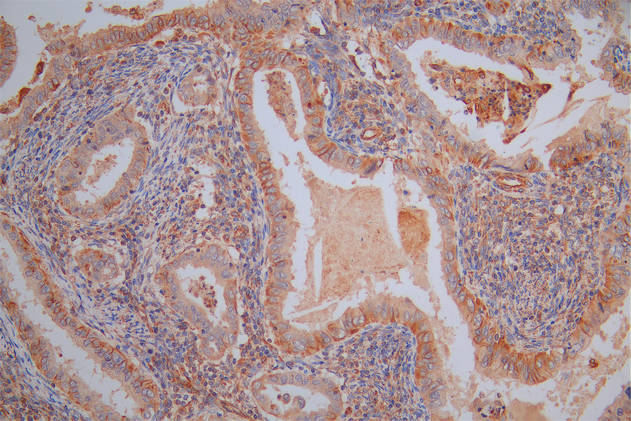
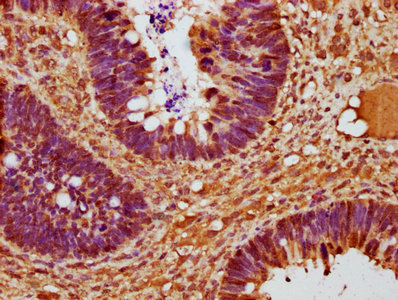 IHC image of CSB-PA004812ESR2HU diluted at 1:225 and staining in paraffin-embedded human ovarian cancer performed on a Leica BondTM system. After dewaxing and hydration, antigen retrieval was mediated by high pressure in a citrate buffer (pH 6.0). Section was blocked with 10% normal goat serum 30min at RT. Then primary antibody (1% BSA) was incubated at 4°C overnight. The primary is detected by a biotinylated secondary antibody and visualized using an HRP conjugated SP system.
 -
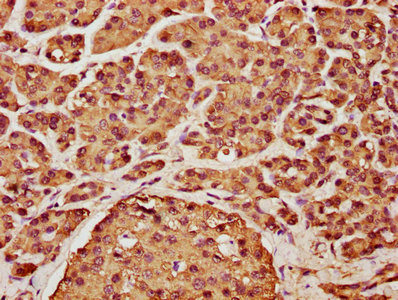 IHC image of CSB-PA004812ESR2HU diluted at 1:225 and staining in paraffin-embedded human pancreatic cancer performed on a Leica BondTM system. After dewaxing and hydration, antigen retrieval was mediated by high pressure in a citrate buffer (pH 6.0). Section was blocked with 10% normal goat serum 30min at RT. Then primary antibody (1% BSA) was incubated at 4°C overnight. The primary is detected by a biotinylated secondary antibody and visualized using an HRP conjugated SP system.
 -
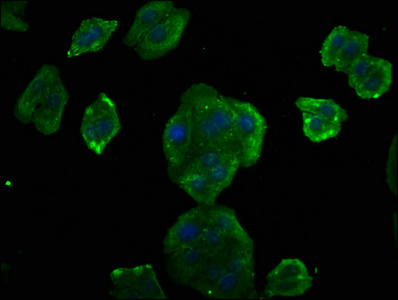 Immunofluorescence staining of HepG2 cells with CSB-PA004812ESR2HU at 1:75, counter-stained with DAPI. The cells were fixed in 4% formaldehyde, permeabilized using 0.2% Triton X-100 and blocked in 10% normal Goat Serum. The cells were then incubated with the antibody overnight at 4°C. The secondary antibody was Alexa Fluor 488-congugated AffiniPure Goat Anti-Rabbit IgG(H+L).
-
-
其他:
產品詳情
-
產品名稱:Rabbit anti-Homo sapiens (Human) CCND2 Polyclonal antibody
-
Uniprot No.:
-
基因名:
-
別名:CCND 2 antibody; ccnd2 antibody; CCND2_HUMAN antibody; CyclinD2 antibody; G1/S specific cyclin D2 antibody; G1/S-specific cyclin-D2 antibody; KIAK0002 antibody; MGC102758 antibody; MPPH3 antibody
-
宿主:Rabbit
-
反應種屬:Human, Mouse
-
免疫原:Recombinant Human G1/S-specific cyclin-D2 protein (1-289AA)
-
免疫原種屬:Homo sapiens (Human)
-
標記方式:Non-conjugated
-
克隆類型:Polyclonal
-
抗體亞型:IgG
-
純化方式:Antigen Affinity purified
-
濃度:It differs from different batches. Please contact us to confirm it.
-
保存緩沖液:PBS with 0.02% sodium azide, 50% glycerol, pH7.3.
-
產品提供形式:Liquid
-
應用范圍:ELISA, WB, IHC,IF
-
推薦稀釋比:
Application Recommended Dilution WB 1:500-1:5000 IHC 1:20-1:500 IF 1:50-1:200 -
Protocols:
-
儲存條件:Upon receipt, store at -20°C or -80°C. Avoid repeated freeze.
-
貨期:Basically, we can dispatch the products out in 1-3 working days after receiving your orders. Delivery time maybe differs from different purchasing way or location, please kindly consult your local distributors for specific delivery time.
-
用途:For Research Use Only. Not for use in diagnostic or therapeutic procedures.
產品評價

相關產品
靶點詳情
-
功能:Regulatory component of the cyclin D2-CDK4 (DC) complex that phosphorylates and inhibits members of the retinoblastoma (RB) protein family including RB1 and regulates the cell-cycle during G(1)/S transition. Phosphorylation of RB1 allows dissociation of the transcription factor E2F from the RB/E2F complex and the subsequent transcription of E2F target genes which are responsible for the progression through the G(1) phase. Hypophosphorylates RB1 in early G(1) phase. Cyclin D-CDK4 complexes are major integrators of various mitogenenic and antimitogenic signals.
-
基因功能參考文獻:
- GACAT3 promotes breast cancer malignancy by sponging miR-497, leading to the enhancement of its endogenous target CCND2. These results suggest that GACAT3/miR-497/CCND2 is a potential therapeutic target and biomarker for breast cancer PMID: 29945347
- Our results indicate that miR-4317 can reduce Non-small cell lung cancer (NSCLC) cell growth and metastasis by targeting FGF9 and CCND2. These findings provide new evidence of miR-4317 as a potential non-invasive biomarker and therapeutic target for NSCLC. PMID: 30227870
- miR-29b suppressed cellular proliferation and promoted apoptosis of pulmonary artery smooth muscle cells, possibly through the inhibition of Mcl-1 and CCND2. PMID: 29662889
- Our results provide novel insights into the function of EBNA3C on cell progression by regulating the cyclin D2 protein and raise the possibility of the development of new anticancer therapies against EBV-associated cancers. PMID: 29997218
- present study provides novel insight into the genetics of myeloid malignancies, namely Philadelphia-negative neutrophilic leukemias. Our work suggests that in addition to the commonly recurring classes of genes that are frequently mutated in these malignancies, recurrent mutations in cyclin D2, and perhaps other cell cycle regulators, have biochemical and therapeutic consequences and may play important roles in the pathog PMID: 28630439
- focal gain of CCND2 and adjacent regions was seen in 8 of 9 (89%) gemistocytic IDH mutant astrocytomas PMID: 28000032
- data indicate that linc00598 plays an important role in cell cycle regulation and proliferation through its ability to regulate the transcription of CCND2. PMID: 27572135
- NAV2 and CCND2 are novel candidate prognostic markers in uterine leiomyosarcoma and uterine low-grade endometrial stromal sarcoma, respectively. PMID: 28643014
- The surface immune molecule CD274 plays a critical role in the proliferation of leukemia-initiating cells, LICs. The CD274/JNK/Cyclin D2 pathway promotes the cell cycle entry of LIC. PMID: 27855694
- High CCND2 expression is associated with Metastasis of Colorectal Cancer. PMID: 28933597
- Mutation in the CCND2 gene is associated with acute myeloid leukemia. PMID: 27843138
- data suggested that loss of CCND2 expression is closely associated with the promoter aberrant methylation PMID: 27583477
- MiR-497 significantly suppressed cell proliferation by arresting the cell cycle through the CCND2 protein. PMID: 27918592
- cyclin D2 acts as regulator of cell cycle proteins affecting SAMHD1-mediated HIV-1 restriction in non-proliferating macrophages. PMID: 27541004
- CCND2-AS1 promotes glioma cells proliferation and growth in a process that involves Wnt and beta-catenin PMID: 27923660
- CCND1 is downregulated, whereas CCND2 is not, following ionizing radiation (IR) . Both CCND1- and CCND2-expressing MM cells arrested in S/G2/M, and did not differ in other cell-cycle proteins or sensitivity to IR.Differential expression of D-cyclin does not appear to affect cell-cycle response to IR, and is unlikely to underlie differential sensitivity to DNA damage. PMID: 27146121
- Bioinformatics analysis further revealed cyclin D2 (CCND2) and AKT3, putative tumor promoters, as potential targets of miR610. Data from reporter assays showed that miR610 directly binds to the 3'untranslated PMID: 26782072
- this study shows that miR-124-3p may negatively regulate the transcription of the STAT3 by interfering with its 3'UTR, and the degradation of STAT3 affects its downstream expression of such as p-STAT3, CCND2 and MMP-2 PMID: 26707908
- these results highlight the impact of CCND2 3'UTR shortening on miRNA-dependent regulation of CCND2 in multiple myeloma. PMID: 26341922
- The results do not support our hypothesis that common germline genetic variants in the CCND2 genes is associated with the risk of developing medulloblastoma. PMID: 26290144
- miR-198 inhibited HaCaT cell proliferation by directly targeting CCND2. PMID: 26225959
- CCND2 was identified as a putative target gene for SMYD3 transcriptional regulation, through trimethylation of H4K20.Our results support a proto-oncogenic role for SMYD3 in prostate carcinogenesis, mainly due to its methyltransferase enzymatic activity. PMID: 25980436
- Up-regulation of clyclinD2 regulates laryngeal squamous cell carcinoma cell growth. PMID: 26221902
- Treatment of rSCC-61 and SCC-61 with the DNA hypomethylating agent 5-aza-2'deoxycitidine increased CCND2 levels only in rSCC-61 cells, while treatment with the control reagent cytosine arabinoside did not influence the expression of this gene PMID: 25961636
- miR206 inhibits glioma progression via the regulation of cyclinD2 and that miR206 may be a novel biomarker with potential for use as a therapeutic target in gliomas. PMID: 25572712
- the dysregulation of miR-206-CCND2 axis may contribute to the aggressive progression and poor prognosis of human gastric cancer. PMID: 25960238
- OY-TES-1 downregulation in liver cancer cells promotes cell proliferation by upregulating CCND2 and CDCA3. PMID: 25673160
- Cyclin D2 hypermethylation is associated with breast cancer. PMID: 25824739
- Methylation changes were enriched in MSX1, CCND2, and DAXX at specific loci within the hippocampus of patients with schizophrenia and bipolar disorder. PMID: 25738424
- Study establishes that a low-frequency allele in CCND2 halves the risk of type 2 diabetes primarily through enhanced insulin secretion. PMID: 25605810
- Stepwise Cox regression modelling suggested that the methylation of genes HSPB1, CCND2 and DPYS contributed objective prognostic information to Gleason score and PSA with respect to prostate cancer-related death. PMID: 25193387
- study establishes that a low frequency allele in CCND2 halves the risk of type 2 diabetes primarily through enhanced insulin secretion PMID: 25605810
- results provide evidence that CCND2 polymorphism rs3217927 may be involved in the etiology of childhood ALL, and the GG genotype of rs3217927 may modulate the genetic susceptibility to childhood ALL in the Chinese population. PMID: 24743557
- miR-154 plays a prominent role in prostate cancer proliferation by suppressing CCND2 PMID: 23428540
- Together, this study has uncovered a positive role of cyclin D2 in hepatitis B virus replication. PMID: 24992041
- De novo CCND2 mutations leading to stabilization of cyclin D2 cause megalencephaly-polymicrogyria-polydactyly-hydrocephalus syndrome. PMID: 24705253
- Study reveals molecular insight into how the Ets family transcription factor Pea3 favors EMT and contributes to tumorigenesis via a negative regulatory loop with Cyclin D2, a new Pea3 target gene. PMID: 23989931
- A low-frequency (1.47%) variant in intron 1 of CCND2, rs76895963[G], reduces risk of type 2 diabetes by half (odds ratio (OR) = 0.53, P = 5.0 x 10(-21)) and is correlated with increased CCND2 expression. PMID: 24464100
- Frequent aberrations of CCND2 and RB1 is associated with intracranial germ cell tumors PMID: 24249158
- our results demonstrate that cyclin D2 has a critical role in cell cycle progression and the tumorigenicity of glioblastoma stem cells PMID: 22964630
- Cyclin D2 is a direct target of miR-206 in breast cancer cells PMID: 23466356
- Experimental verification of the ability of this small RNA molecule to regulate the expression of CCND2, a gene with documented oncogenic activity, confirms its functional role as a miRNA. PMID: 22954617
- CCND2 gene polymorphism is associated in the pathogenesis of colorectal cancers. PMID: 23266556
- miR-206 could suppress gastric carcinoma cell proliferation at least partially through targeting cyclinD2 expression. PMID: 23348698
- Chromosomal rearrangements of the CCND2 locus were detected in 55% of the cases, with an IG gene as partner in 18 of 22, in particular with light chains (10 IGK@ and 5 IGL@)for mantle cell lymphoma. PMID: 23255553
- Transgenic K562 cells have distinct gene expression profiles both in steady state and during terminal erythroid differentiation, with GATA1s expression characterised by lack of repression of MYB, CCND2 and SKI. PMID: 22853316
- CCND2, was the most "dietary sensitive" genes, as methylation of their promoters was associated with intakes of at least two out of the eight dietary methyl factors examined. PMID: 22048254
- High expression of cyclin D2 is associated with mantle cell lymphoma. PMID: 21479697
- Single nucleotide polymorphisms of CCND2, RAD23B, GRP78, CEP164, MDM2, and ALDH2 genes were significantly associated with development and recurrence of hepatocellular carcinoma in Japanese patients with hepatitis C virus. PMID: 22004425
- The authors demonstrate that Cyclin D2 is also expressed in the developing human cortex within similar domains, thus indicating that its role as a fate determinant is ancient and conserved. PMID: 22395070
顯示更多
收起更多
-
相關疾病:Megalencephaly-polymicrogyria-polydactyly-hydrocephalus syndrome 3 (MPPH3)
-
亞細胞定位:Nucleus. Cytoplasm. Nucleus membrane.; [Isoform 2]: Cytoplasm.
-
蛋白家族:Cyclin family, Cyclin D subfamily
-
數據庫鏈接:
Most popular with customers
-
-
YWHAB Recombinant Monoclonal Antibody
Applications: ELISA, WB, IHC, IF, FC
Species Reactivity: Human, Mouse, Rat
-
-
-
-
-
-