Recombinant Human Tyrosinase (TYR), partial
-
中文名稱:Recombinant Human Tyrosinase (TYR), partial
-
品名簡稱:Recombinant Human TYR protein, partial
-
貨號:CSB-BP025394HU1
-
說明書:
-
規(guī)格:¥1902
-
圖片:
-
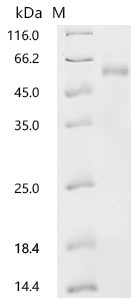 (Tris-Glycine gel) Discontinuous SDS-PAGE (reduced) with 5% enrichment gel and 15% separation gel.
-
-
其他:
產(chǎn)品詳情
-
純度:Greater than 95% as determined by SDS-PAGE.
-
生物活性:Not Test
-
基因名:
-
Uniprot No.:
-
別名:LB24-AB;Monophenol monooxygenase;SK29-AB;Tumor rejection antigen AB
-
種屬:Homo sapiens (Human)
-
蛋白長度:Partial
-
來源:Homo sapiens (Human)
-
分子量:56.6 kDa
-
表達區(qū)域:19-469aa
-
氨基酸序列HFPRACVSSKNLMEKECCPPWSGDRSPCGQLSGRGSCQNILLSNAPLGPQFPFTGVDDRESWPSVFYNRTCQCSGNFMGFNCGNCKFGFWGPNCTERRLLVRRNIFDLSAPEKDKFFAYLTLAKHTISSDYVIPIGTYGQMKNGSTPMFNDINIYDLFVWMHYYVSMDALLGGSEIWRDIDFAHEAPAFLPWHRLFLLRWEQEIQKLTGDENFTIPYWDWRDAEKCDICTDEYMGGQHPTNPNLLSPASFFSSWQIVCSRLEEYNSHQSLCNGTPEGPLRRNPGNHDKSRTPRLPSSADVEFCLSLTQYESGSMDKAANFSFRNTLEGFASPLTGIADASQSSMHNALHIYMNGTMSQVQGSANDPIFLLHHAFVDSIFEQWLRRHRPLQEVYPEANAPIGHNRESYMVPFIPLYRNGDFFISSKDLGYDYSYLQDSDPDSFQDYIKSYLE
Note: The complete sequence may include tag sequence, target protein sequence, linker sequence and extra sequence that is translated with the protein sequence for the purpose(s) of secretion, stability, solubility, etc.
If the exact amino acid sequence of this recombinant protein is critical to your application, please explicitly request the full and complete sequence of this protein before ordering. -
蛋白標簽:C-terminal 6xHis-tagged
-
產(chǎn)品提供形式:Liquid or Lyophilized powder
Note: We will preferentially ship the format that we have in stock, however, if you have any special requirement for the format, please remark your requirement when placing the order, we will prepare according to your demand. -
緩沖液:If the delivery form is liquid, the default storage buffer is Tris/PBS-based buffer, 5%-50% glycerol. If the delivery form is lyophilized powder, the buffer before lyophilization is Tris/PBS-based buffer, 6% Trehalose, pH 8.0.
-
復溶:We recommend that this vial be briefly centrifuged prior to opening to bring the contents to the bottom. Please reconstitute protein in deionized sterile water to a concentration of 0.1-1.0 mg/mL.We recommend to add 5-50% of glycerol (final concentration) and aliquot for long-term storage at -20℃/-80℃. Our default final concentration of glycerol is 50%. Customers could use it as reference.
-
儲存條件:Store at -20°C/-80°C upon receipt, aliquoting is necessary for mutiple use. Avoid repeated freeze-thaw cycles.
-
保質(zhì)期:The shelf life is related to many factors, storage state, buffer ingredients, storage temperature and the stability of the protein itself.
Generally, the shelf life of liquid form is 6 months at -20°C/-80°C. The shelf life of lyophilized form is 12 months at -20°C/-80°C. -
貨期:Basically, we can dispatch the products out in 3-7 working days after receiving your orders. Delivery time may differ from different purchasing way or location, please kindly consult your local distributors for specific delivery time.
-
注意事項:Repeated freezing and thawing is not recommended. Store working aliquots at 4℃ for up to one week.
-
Datasheet & COA:Please contact us to get it.
產(chǎn)品評價

相關(guān)產(chǎn)品
靶點詳情
-
功能:This is a copper-containing oxidase that functions in the formation of pigments such as melanins and other polyphenolic compounds. Catalyzes the initial and rate limiting step in the cascade of reactions leading to melanin production from tyrosine. In addition to hydroxylating tyrosine to DOPA (3,4-dihydroxyphenylalanine), also catalyzes the oxidation of DOPA to DOPA-quinone, and possibly the oxidation of DHI (5,6-dihydroxyindole) to indole-5,6 quinone.
-
基因功能參考文獻:
- Membrane-associated human tyrosinase is an enzymatically active monomeric glycoprotein. PMID: 29870551
- The effect of histidine mutations on the structural stability of human tyrosinase leading to albinism has been reported. PMID: 28640309
- Compound heterozygous mutations (c.832C>T and c.929_930insC) in the TYR gene may be responsible for partial clinical manifestations of oculocutaneous albinism PMID: 27829221
- Mutations in tyrosinase gene is associated with Oculocutaneous albinism type 1. PMID: 27775880
- tyrosinase as a potential GPR143 binding protein opens new avenues for investigating the mechanisms that regulate pigmentation and neurogenesis. PMID: 27720922
- Aberrant tyrosinase expression in an atypical fibroxanthoma PMID: 28097678
- Findings suggested that miR-330-5p represents a potential tumor-suppressive miRNA and plays an important role in cutaneous malignant melanoma progression by suppressing TYR and PDIA3 expression. PMID: 27363653
- Four missense substitutions (p.Arg239Trp, p.Ser192Tyr, p.Ser44Arg and p.Arg77Gln) were identified in tyrosinase in the families with oculocutaneous albinism linkage, and another missense substitution (p.Gln272Lys) was identified in the family with OCA4 linkage PMID: 25703744
- LEF-1 and MITF regulate tyrosinase gene transcription in vitro via binding to its promoter. PMID: 26580798
- Data show that mutant microphthalmia-associated transcription factor (MITF) with loss of localization signals (NLS) has failed to transactivate the transcriptional activities of target gene tyrosinase (TYR), which can cause Waardenburg syndrome. PMID: 26663053
- The tyrosinase gene was examined in 23 unrelated patients with autosomal recessive ocular albinism or nonsyndromic oculocutaneous albinism. TYR gene mutations were identi fi ed in 14 (app. 60%) albinism patients. PMID: 26167114
- The two mutations (c.1114delG in the TYR gene and c.1426A>G in the OCA2 gene) may be responsible for partial clinical manifestations of Oculocutaneous albinism. PMID: 25919014
- Molecular analysis identified two compound heterozygous TYR mutations known to cause OCAIA and cosegregate with oculocutaneous albinism. In addition, we identified a novel heterozygous PAX6 mutation confirming the atypical aniridia phenotype. PMID: 25687215
- Overall, our data strongly suggest that IRF4, MC1R and TYR genes likely have pleiotropic effects, a combination of pigmentation and oncogenic functions, resulting in an increased risk of actinic keratosis. PMID: 25724930
- Data indicate that tyrosinase is used as a reporter gene owing to its strong optical absorption and enzymatic amplification mechanism and melamin production. PMID: 24936769
- Identification of four novel TYR mutations in a Chinese Han population with Oculocutaneous albinism 1. PMID: 25577957
- 11/11 individuals with homozygous or compound heterozygous mutations in TYR, have no discernible pigmentation in hair, skin and eyes PMID: 25455140
- human tyrosinase, which can oxidize l-tyrosine but not d-tyrosine, was found to oxidize both R(-)- and S(+)-rhododendrol. PMID: 25130058
- Among the 24 (58.5%) patients with OCA1, 21 different TYR mutations were identified, including three previously unidentified alleles PMID: 24721949
- Two new pathogenic p.C89S and p.H180R mutations in TYR were detected in two OCA1 patients. PMID: 25216246
- A meaningful met form of TYR was built by homology modeling. PMID: 24612747
- miR-330-5p is a potent negative regulator of TYR, but not of MITF, in pigmented melanoma cells and normal melanocytes PMID: 24862846
- Molecular analysis of common polymorphisms within the human Tyrosinase locus and genetic association with pigmentation traits. PMID: 24739399
- We report a novel missense substitution in the TYR gene(p.Ile198Thr) in a Pakistani family with oculocutaneous albinism. PMID: 24934919
- cAMP-PKA-CREB-activated microphthalmia-associated transcription factor and tyrosinase expression is inhibited by the novel novel adamantyl benzylbenzamide derivative, AP736 PMID: 24107097
- High-resolution array-CGH in patients with oculocutaneous albinism identifies new deletions of the TYR, OCA2, and SLC45A2 genes and a complex rearrangement of the OCA2 gene. PMID: 24118800
- Treatment with an inhibitor of miR-203 downregulated the expression level of TYR in melanoma cells. PMID: 23884313
- We examined the association between 12 variants of four pigmentation-related genes (TYR, OCA2, SLC45A2, MC1R) and variations in the melanin index of 456 Japanese females using a multiple regression analysis. PMID: 23165166
- A G47D & 1379delTT mutation was seen in 4 members of an oculocutaneous albinism family. An unrelated patient was a compound heterozygote for the G47D & D42N mutations. PMID: 23242301
- The results suggested that the miRNAs may be involved in MITF regulation of TYR, TYRP1 and TYRP2, which provides a new clue for understanding the role of miRNAs in melanocyte dysfunctional disease. PMID: 22898827
- W400L is the most frequent mutation in oculocutaneous albinism type 1, which accounted for about 30.0% of Chinese mainland patients. PMID: 22097729
- Analysis showed that certain mutations can affect the dynamic properties of tyrosinase and can lead to disease conditions, providing a significant insight into the molecular mechanism of oculocutaneous albinism type 1A. PMID: 23085273
- DGK regulates melanogenesis via modulation of the posttranslational processing of tyrosinase, which may be related with the protein degradation machinery. PMID: 22895365
- Report association between TYR genetic variants and melanoma susceptibilty in southern European patients. PMID: 22464347
- By using a population-based material of high-risk melanoma cases, we demonstrate a significant effect of both MC1R red hair color (RHC) variants and an ASIP haplotype, but could not replicate an association with postulated risk SNPs of TYR and TYRP1. PMID: 22447455
- The HLA-A-TYR pathways is involved in antigen presentation and risk in generalized vitiligo. PMID: 22402439
- study provided new information about a novel mutation, p.I151S, in the TYR gene in a Chinese family with oculocutaneous albinism type PMID: 22088535
- Melanoma cells present high levels of HLA-A2-tyrosinase in association with instability and aberrant intracellular processing of tyrosinase. PMID: 22531911
- these findings emphasize the role of OTX2 in regulating the human TYR gene, with implications for inter-individual differences in melanin synthesis, retinal development, and function as well as susceptibility to retinal degeneration associated with aging. PMID: 22259223
- TYR mutations identified included c.1037-7T>A/c.1037-10delTT, p.D383N, p.R77Q and p.R299H. PMID: 22294196
- Three mutational alleles, R278X and R52I of the TYR gene and C229Y of the SLC45A2 gene, are added to the mutational spectra of Korean patients with oculocutaneous albinism (OCA) PMID: 22042571
- association of TYR p.R402Q with skin cancer risk in the French population. PMID: 21906913
- TYR gene mutations have a more severe effect on pigmentation than mutations in OCA2 and the GPR143 gene. Nevertheless, mutations in these genes affect the development of visual function either directly or by interaction with other genes like MC1R. PMID: 21541274
- Data show that Mc1R, HERC2, IRF4, TYR and EXOC2 are ranked highest in hair color prediction analysis. PMID: 21197618
- TYR gene mutations represent a relevant cause of oculocutaneous albinism in Italy, whereas mutations in P present a lower frequency. Clinical analysis revealed that the severity of the ocular manifestations depends on the degree of retinal pigmentation. PMID: 20861488
- results suggest that an OCA2 gene defect is the second most prevalent type of oculocutaneous albinism in India after TYR & the presence of homozygous mutations in affected pedigrees underscores the lack of intermixing between the affected ethnicities PMID: 20426782
- in India, the frequency of OCA1 subtypes is about 61% PMID: 20861851
- We have identified five different TYR mutations, including one novel mutation, which caused oculocutaneous albinism type 1 in Chinese. PMID: 20447099
- observed associations between generalized vitiligo and markers implicating multiple genes, one (TYR) that may mediate target-cell specificity and indicate a mutually exclusive relationship between susceptibility to vitiligo and susceptibility to melanoma PMID: 20410501
- T cell receptor transgenic mice are created that recognize an epitope of the melanocyte protein, tyrosinase. These animals develop vitiligo with strikingly similar characteristics to the human disease. PMID: 20083666
顯示更多
收起更多
-
相關(guān)疾病:Albinism, oculocutaneous, 1A (OCA1A); Albinism, oculocutaneous, 1B (OCA1B)
-
亞細胞定位:Melanosome membrane; Single-pass type I membrane protein. Melanosome.
-
蛋白家族:Tyrosinase family
-
數(shù)據(jù)庫鏈接:
Most popular with customers
-
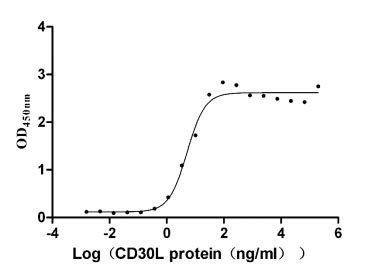
Recombinant Human Tumor necrosis factor ligand superfamily member 8 (TNFSF8), partial (Active)
Express system: Mammalian cell
Species: Homo sapiens (Human)
-
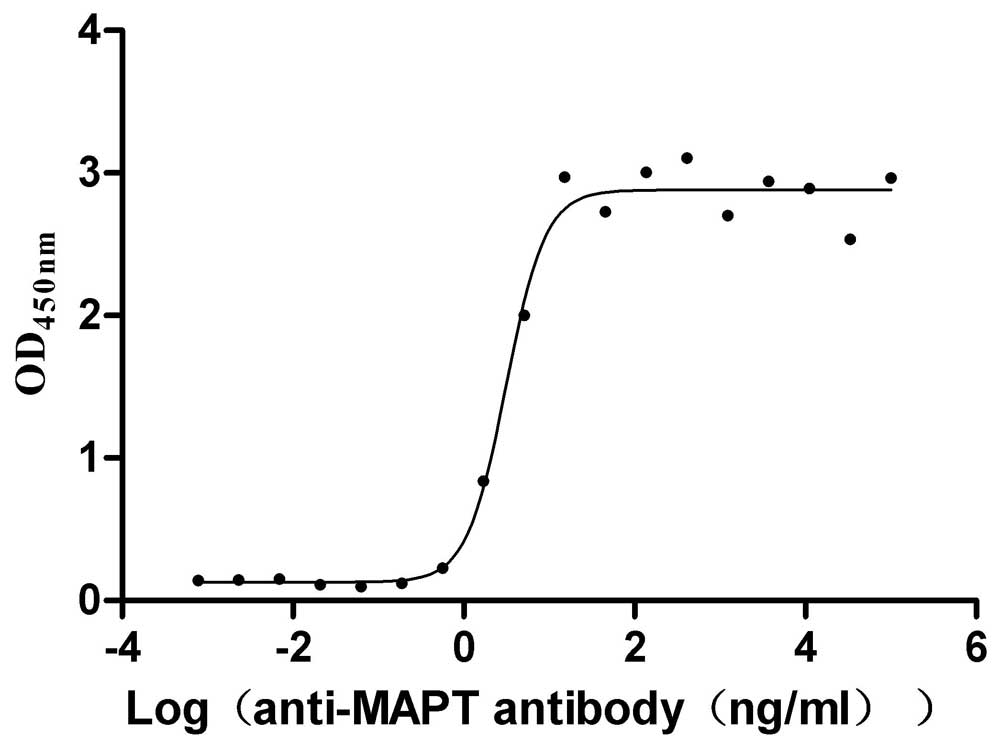
Recombinant Macaca mulatta Microtubule-associated protein tau (MAPT) (Active)
Express system: Mammalian cell
Species: Macaca mulatta (Rhesus macaque)
-
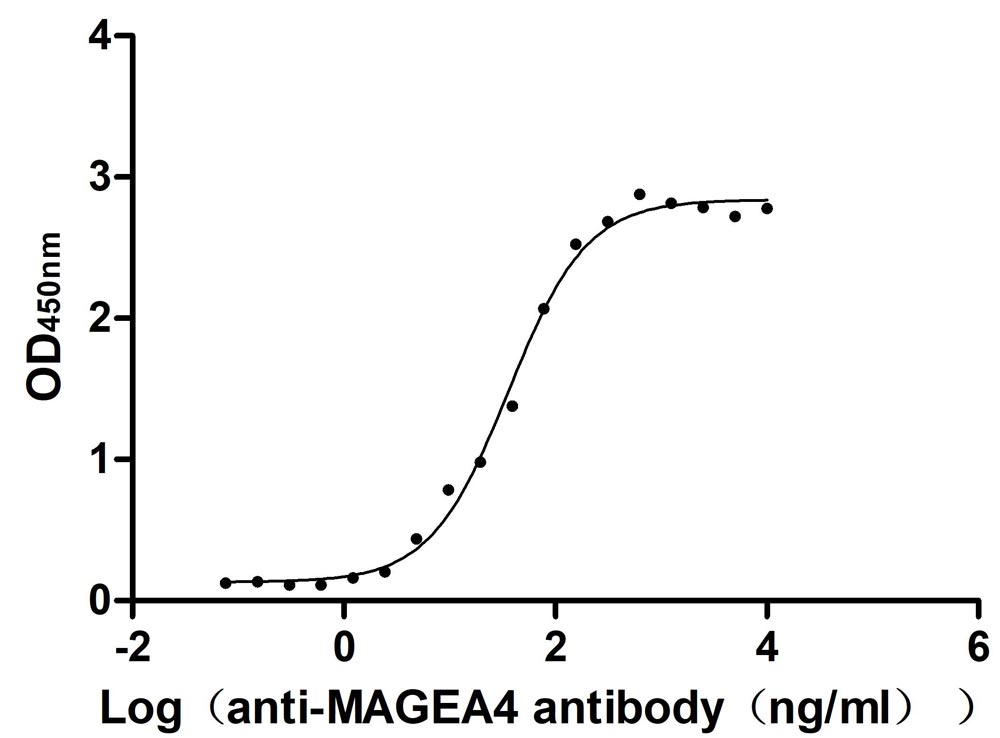
Recombinant Human Melanoma-associated antigen 4 (MAGEA4) (Active)
Express system: Mammalian cell
Species: Homo sapiens (Human)
-
Recombinant Human Cadherin-17 (CDH17), partial (Active)
Express system: Mammalian cell
Species: Homo sapiens (Human)
-
Recombinant Human C-C chemokine receptor type 9 (CCR9)-VLPs (Active)
Express system: Mammalian cell
Species: Homo sapiens (Human)
-
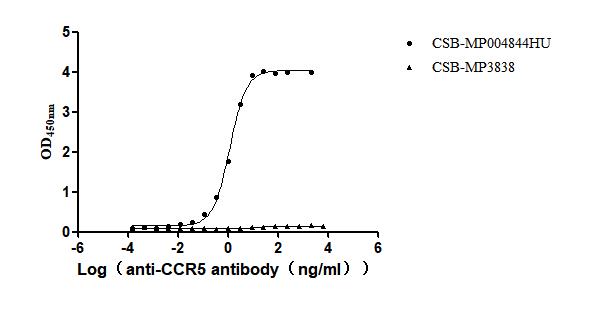
Recombinant Human C-C chemokine receptor type 5 (CCR5)-VLPs (Active)
Express system: Mammalian cell
Species: Homo sapiens (Human)