SPTLC1 Antibody
-
中文名稱(chēng):SPTLC1兔多克隆抗體
-
貨號(hào):CSB-PA022639GA01HU
-
規(guī)格:¥3,900
-
其他:
產(chǎn)品詳情
-
Uniprot No.:
-
基因名:SPTLC1
-
別名:SPTLC1; LCB1; Serine palmitoyltransferase 1; Long chain base biosynthesis protein 1; LCB 1; Serine-palmitoyl-CoA transferase 1; SPT 1; SPT1
-
宿主:Rabbit
-
反應(yīng)種屬:Human,Mouse,Rat
-
免疫原:Human SPTLC1
-
免疫原種屬:Homo sapiens (Human)
-
抗體亞型:IgG
-
純化方式:Antigen Affinity purified
-
濃度:It differs from different batches. Please contact us to confirm it.
-
保存緩沖液:PBS with 0.1% Sodium Azide, 50% Glycerol, pH 7.3. -20°C, Avoid freeze / thaw cycles.
-
產(chǎn)品提供形式:Liquid
-
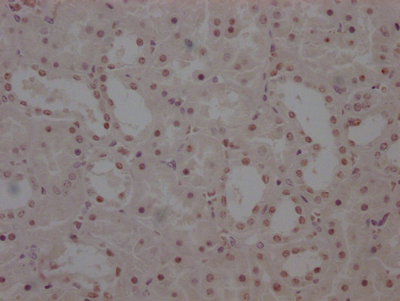
應(yīng)用范圍:ELISA,WB,IHC
-
Protocols:
-
儲(chǔ)存條件:Upon receipt, store at -20°C or -80°C. Avoid repeated freeze.
-
貨期:Basically, we can dispatch the products out in 1-3 working days after receiving your orders. Delivery time maybe differs from different purchasing way or location, please kindly consult your local distributors for specific delivery time.
-
用途:For Research Use Only. Not for use in diagnostic or therapeutic procedures.
產(chǎn)品評(píng)價(jià)

相關(guān)產(chǎn)品
靶點(diǎn)詳情
-
功能:Serine palmitoyltransferase (SPT). The heterodimer formed with SPTLC2 or SPTLC3 constitutes the catalytic core. The composition of the serine palmitoyltransferase (SPT) complex determines the substrate preference. The SPTLC1-SPTLC2-SPTSSA complex shows a strong preference for C16-CoA substrate, while the SPTLC1-SPTLC3-SPTSSA isozyme uses both C14-CoA and C16-CoA as substrates, with a slight preference for C14-CoA. The SPTLC1-SPTLC2-SPTSSB complex shows a strong preference for C18-CoA substrate, while the SPTLC1-SPTLC3-SPTSSB isozyme displays an ability to use a broader range of acyl-CoAs, without apparent preference. Required for adipocyte cell viability and metabolic homeostasis.
-
基因功能參考文獻(xiàn):
- Therefore, SPT may be an attractive therapeutic anti-cancer drug target for which compound-2 may be a promising new drug. PMID: 28108287
- Hereditary sensory and autonomic neuropathy type 1 mutations in SPTLC1 have distinct biochemical properties, which allowed for the prediction of the clinical symptoms on the basis of the plasma sphingoid base profile. PMID: 26681808
- This study describe aberrant morphology of SPTLC1C133W Dorsal Root Ganglia characterized by increased neurite growth, branching, and expression of p-ERM at neuronal growth cones. PMID: 26446223
- A novel SPTLC2-S384F variant in 2 unrelated HSAN1 families resulted in elevated plasma 1-deoxySL levels. Expression of this mutant in HEK293 cells increased 1-deoxySL formation. The substrate specificity is affected by phosphorylation at this position. PMID: 25567748
- Therefore, Ser331 in SPTLC1 is a crucial amino acid, which characterizes the Hereditary sensory and autonomic neuropathy type I phenotype PMID: 24247255
- SPTLC1 mutations cause mitochondrial abnormalities and ER stress in HSN1 cells. PMID: 24673574
- Endoplasmic reticulum-resident human protein serine palmitoyltransferase long chain-1 (SPTLC1) is phosphorylated at Tyr(164) by the tyrosine kinase ABL. PMID: 23629659
- The p.CYS133Trp mutation in SPTLC1 is the most common cause of hereditary and autonomic neuropathy in the United Kingdom population. PMID: 22302274
- SPTLC1 mutations p.S331F and p.A352V result in a reduction of serine palmitoyltransferase activity in vitro and are associated with increased levels of the deoxysphingoid in patients' plasma samples. PMID: 21618344
- Hereditary sensory neuropathy type 1 is caused by a gain of function mutation in SPTLC1 which causes the accumulation of two neurotoxic sphingolipids PMID: 20097765
- an increase in transepidermal water loss is an obligatory trigger for the upregulation of serine palmitoyltransferase mRNA expression in human epidermis PMID: 12445191
- A novel missense mutation in exon 13 of the SPTLC1 gene (c.1160G-->C; p.G387A) in twin sisters with a severe HSN I phenotype is reported. PMID: 15037712
- SPT1 aggregation preceded cell death in hypoxia and represents the first evidence of acute protein aggregation during hypoxia. PMID: 15467453
- Transgenic mouse lines that ubiquitously overexpress either wild-type or mutant SPTLC1 represent a novel mouse model of peripheral neuropathy and confirm the link between mutant SPT and neuronal dysfunction. PMID: 16210380
- Results suggest that functional serine palmitoyltransferase is not a dimer, but a higher organized complex, composed of three distinct subunits (SPTLC1, SPTLC2 and SPTLC3) with a molecular mass of 480 kDa. PMID: 17331073
- serine palmitoyltransferase and ceramidase are two major ceramide metabolizing enzymes that may have roles in psoriatic epidermis PMID: 17982236
- SPTLC1 mutational analysis reveals the C133W mutation, a mutation common in British hereditary sensory and autonomic neuropathy type I patients. PMID: 18018475
- Physical interaction of ABCA1 and SPTLC1 results in reduction of ABCA1 activity and that inhibition of this interaction produces enhanced cholesterol efflux. PMID: 18484747
- we show that none of the HSAN I mutations interferes with serine palmitoyltransferase complex formation; the G387A mutation is most likely not directly associated with Hereditary sensory neuropathy type 1 PMID: 19132419
- SPT subunit 1 might be present also in focal adhesions and the nucleus. PMID: 19362163
- discovery of 2 proteins, ssSPTa and ssSPTb, which each interacts with both hLCB1 and hLCB2, suggesting that there are 4 distinct human SPT isozymes. PMID: 19416851
- Cell polarity factor Par3 binds SPTLC1 and modulates monocyte serine palmitoyltransferase activity and chemotaxis PMID: 19592499
- Adult-onset hereditary sensory and autonomic neuropathy type (HSAN)I is the hypothetical result of a gain-of-function mutation in SPTLC1 that leads to accumulation of a toxic metabolite. PMID: 19923297
顯示更多
收起更多
-
相關(guān)疾病:Neuropathy, hereditary sensory and autonomic, 1A (HSAN1A)
-
亞細(xì)胞定位:Endoplasmic reticulum membrane; Single-pass membrane protein.
-
蛋白家族:Class-II pyridoxal-phosphate-dependent aminotransferase family
-
組織特異性:Widely expressed. Not detected in small intestine.
-
數(shù)據(jù)庫(kù)鏈接:
Most popular with customers
-
-
Phospho-YAP1 (S127) Recombinant Monoclonal Antibody
Applications: ELISA, WB, IHC
Species Reactivity: Human
-
-
-
-
-
-